
Why Do I Stay Up Late When I’m Exhausted? The ADHD Lens
Exhausted but still awake at midnight? For women with ADHD, late nights are a self-regulation pattern and a reach for personal time. This is why, and what helps.
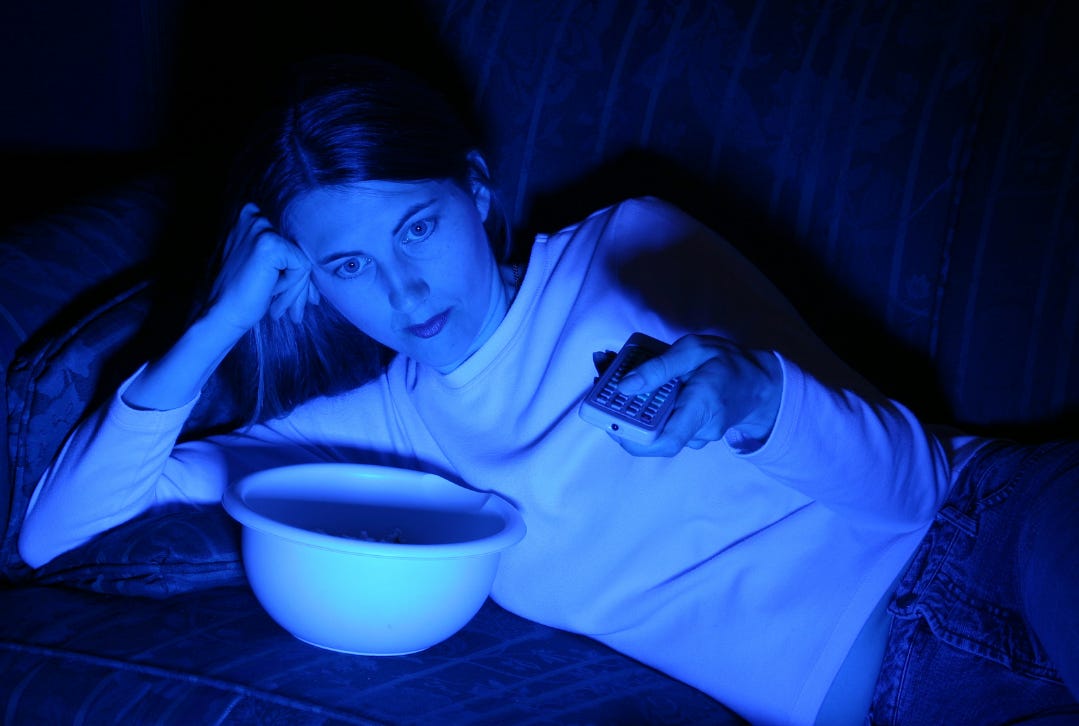
You’ve wanted this sleep since at least two in the afternoon. And here you are, at 11:43pm, thumb sliding across a bright screen, the last quiet hour of the day dissolving into yet another missed promise to yourself. “I’ll try again, tomorrow,” you reason.
Underneath the scrolling is a real question. Why would anyone reject the sleep they are so desperate for?
The answer has very little to do with discipline. What follows is a plain-language walk through what sleep researchers have actually found, so that the next time this happens you have an explanation to reach for instead of shame and regret.
You’re not lazy, you’re locked out
Staying up later than you planned, with nothing obvious forcing the delay, is a recognized behavior. Researchers call it “bedtime procrastination” and have studied it as a self-regulation pattern rather than a character trait.1
You’re also in very ordinary company. In one large sample, most adults pushed their bedtime later at least once a week.2
Here is what the studies line up on:
Lower self-control is moderately linked to more late-night delay, and to shorter, poorer sleep.3
A harder day predicts a later night.4 People who spent the day resisting more urges and demands were more likely to blow past their intended bedtime that night.
You might need Me-Time. When bedtime procrastinators were asked why they stay up, one clear theme was deliberate delay: they said they stayed up because they felt they deserved some time for themselves.5
ADHD increases the likelihood of sleep problems. Among 553 students, those who screened positive for likely ADHD reported more bedtime delay, lower self-control, and shorter sleep than their peers.6
Clarifying research limits:
Most of this research shows correlation; high-quality studies are needed to identify causality.3
The me-time finding comes from a small study of 17 interviews.5 While this study identifies the pattern there are not enough participants to establish how common the pattern is, or to map it neatly to ADHD.
The ADHD result came from a sample of 553 university students; the link between ADHD symptoms and bedtime procrastination was small and it did not study women or mothers specifically.6
“Revenge bedtime procrastination” is a popular phrase, not a medical diagnosis.
None of this erases the pattern, it just keeps us honest about how firmly we can explain it. Even held to that careful standard, the same picture keeps surfacing: your late nights are not one failure of will but two ordinary forces.
Mechanism: Two forces stacking at midnight
Force one, a drained brake.
Picture self-control as a phone battery. Every urge you resist and every demand you meet draws it down a little through the day. By late evening the bar is low, and going to bed asks you to stop something pleasant and begin something dull, the exact move a drained battery struggles to make.
Force two, reaching for alone time.
A second force is more subtle. When your whole day has belonged to other people, the late hours can feel like the only time that is actually yours.
For an ADHD brain, the battery tends to sit lower to begin with, and peeling away from an activity bringing mental relief is a common sticking point. The same two forces simply press harder.
You know the shape of it. You promised yourself an early night at nine, and meant it at the time. By 11pm the house is finally silent, yet you still can’t make your hand close the laptop, or tear yourself away from Netflix. The next morning it gets filed under Failed Discipline. Yet again.
This is not “won’t.” It is a launch signal that doesn’t fire on command, plus one free hour (or three) that is genuinely hard to give up. Once you understand what’s actually happening, your strategy can pivot from “willpower at night” to carving out daytime support as part of real relief.
The fix happens by day, not at bedtime
Fighting the urge to stay up at 9:30pm requires one last push from your executive function battery when it’s most depleted, which is why your promised bedtime keeps collapsing. There is a much better lever, and it sits earlier in the day.
Protect one small window that is genuinely yours, twenty to thirty minutes, with no task attached to it. Some ideas:
Coffee at the window before you open a single email.
Take a short walk without your phone.
Read for pleasure. Not about work. Not about your industry. Not about relationships. Or parenting, or your side hustle. Let your brain rest.
A few quiet minutes in the car before you walk back into the house.
Require 30 (or 20, or 15) minutes of quiet time when your kids get home from school or summer camp. No homework, no devices, no arguing. Quiet down time.
When the need for your own time gets fed earlier in the day, the midnight reach for it tends to loosen its grip. This works alongside the brain, lowering the demand for willpower instead of asking for more of it.
Bottom line
Staying up when you are exhausted is a self-regulation pattern, and for many women a quiet reach for personal time arriving at the worst possible hour for willpower. The kindest lever sits earlier in the day: one small, protected window that belongs only to you.
Late nights are not the lack of discipline you’ve believed it to be. Understanding your brain is what tears the story up. When you see the real mechanism, that late nights are a self-regulation pattern and not a test of willpower, the “something is wrong with me” version stops being true. And once it isn’t true, the guilt has nothing to hold onto. This is not thinking happy thoughts; it’s what opens the possibility of small but lasting changes that bring relief.
If ordering yourself to bed earlier never works no matter how tired you are, the problem may not be the reach for me-time at all, it may be a body clock set later than the world around it. Here's how to tell a late chronotype apart from a disorder, and why it's so common in women with ADHD.

That drained brake by evening isn't just a bedtime story, it's the same finite system running dry earlier every day. Here's the mechanism behind the 4 p.m. snap and why ordinary tasks cost your brain more than they should.

Further reading:
ADHD & Sleep | Research Briefing
Connect:
About Me | Bluesky | Facebook | Instagram | Pinterest | YouTube
The research referenced in this article is intended for informational purposes only and does not constitute medical advice. Always consult a qualified healthcare provider for diagnosis or treatment.
ADHD presents differently for everyone. What resonates here may not reflect every experience.
And that’s okay.
Kroese, et al, 2014, Frontiers in Psychology
Kroese, et al, 2016, Journal of Health Psychology
Hill, Rebar, Ferguson, Shriane, & Vincent, 2022, Sleep Medicine Reviews
Kamphorst, Nauts, De Ridder, & Anderson, 2018, Frontiers in Psychology
Nauts, et al, 2019, Behavioral Sleep Medicine
Uygur & Bahar, 2023, Journal of Contemporary Medicine